
Acupuncture for Elbow Pain in Pinner
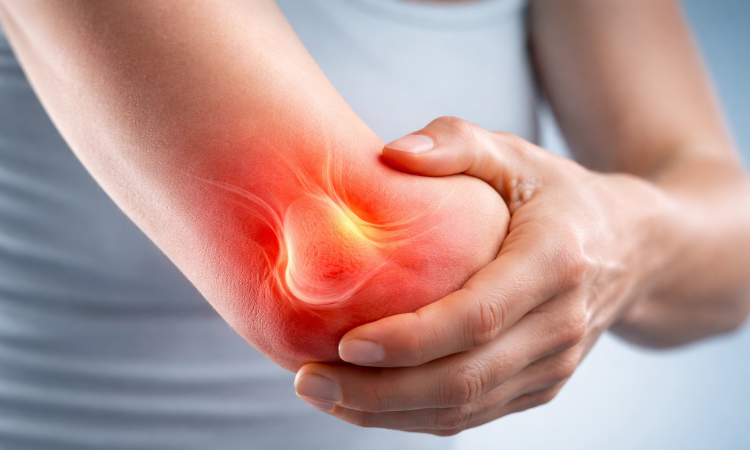
If lifting a kettle causes a sharp twinge or your golf or tennis swing brings on a persistent ache, elbow pain can quickly interfere with daily life. Most elbow problems are caused by overuse and repetitive strain, leading to inflammation or tiny micro‑tears in the tendons that connect the forearm muscles to the elbow.
At VitalQi Acupuncture in Pinner, I regularly treat patients experiencing ongoing elbow discomfort, especially when medication hasn’t helped or symptoms begin to limit everyday activities.
With over 15 years of clinical experience, I provide personalised acupuncture treatments for patients from Pinner, Northwood, Stanmore, Ruislip, Watford and surrounding areas.
The two most common conditions I see in clinic are Golfer’s Elbow and Tennis Elbow.
Understanding Elbow Pain
The elbow is a complex joint that allows you to bend, straighten, and rotate your arm. Because these movements often happen together, it can be difficult to pinpoint exactly which motion triggers the pain.
Elbow discomfort doesn’t always originate in the elbow itself—issues in the neck, upper spine, or shoulder can also refer pain to this area.
Golfers Elbow (Medial Epicondylitis)
Golfer’s elbow affects the inner side of the elbow, where the tendons that flex the wrist and fingers attach. Despite the name, it isn’t limited to golfers. Any activity involving repetitive gripping or wrist‑flexing can contribute, including: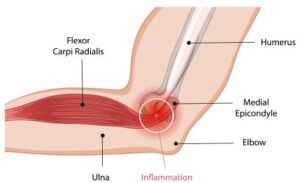
- Typing or computer work
- DIY tasks
- Weightlifting
- Racquet sports
- Throwing sports
Symptoms often include:
- Pain and tenderness on the inner elbow, sometimes radiating down the forearm
- Stiffness, especially when making a fist
- Weakness in the hands or wrists
- Numbness or tingling, often affecting the ring and little fingers
- Pain that may develop gradually or appear suddenly, often worsening with gripping or swinging motions.
Tennis Elbow (Lateral Epicondylitis)
Tennis elbow affects the outer side of the elbow, where the tendons responsible for wrist extension attach. Many people who develop tennis elbow have never played tennis—common triggers include: 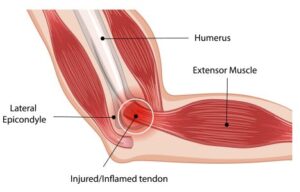
- Repetitive computer use
- DIY or gardening
- Manual Labour
- Racquet sports
- Repetitive lifting or twisting
Symptoms often include:
- Pain and tenderness on the outer elbow, sometimes radiating down the forearm
- Weak grip strength, making it difficult to hold objects
- Pain when lifting, gripping, or twisting movements (e.g. turning a doorknob)
- Discomfort that worsens with repetitive wrist or hand use
- Stiffness or aching in the outer forearm
What Causes Elbow Pain
Elbow pain is most often linked to overuse, repetitive strain, or injury. Activities that involve repeated hand, wrist, or arm movements—whether in sport, work, or hobbies—can overload the tendons and muscles.
Both conditions involve micro-tears, inflammation, and tension in the forearm muscles and tendons, leading to pain, weakness, and reduced mobility.
Additional Risk Factors for Tennis Elbow
- Age (risk increases after 30, especially after 40)
- Skipping warm‑ups before strenuous activity
- Poor technique in sports or exercise
- Incorrect or poorly fitted sports equipment
- Playing racquet sports in poor weather conditions
- Direct trauma to the elbow
- Repetitive‑strain occupations (carpentry, plumbing, music, sewing, assembly‑line work, intensive computer use)
- Recreational activities involving repeated wrist/arm movements (rowing, fishing, throwing sports)
Symptoms of Elbow Pain
Elbow pain can present in many ways. You may experience:
- Pain or stiffness in the dominant arm
- Burning, aching, or stiffness that worsens over time
- Pain that increases with activity and improves with rest
- Pain radiating from the elbow into the forearm, wrist, or fingers
- Morning stiffness or aching
- Difficulty gripping or holding objects
- Tenderness when touching the affected area
- Difficulty turning or flexing the wrist (e.g., turning a doorknob or screwdriver)
- Pain triggered by squeezing or gripping
- Pain during upper‑body exercise or sports
Because several elbow and forearm conditions share similar symptoms, it’s important to seek professional assessment to confirm the cause and rule out other injuries.
How symptoms progress
Elbow pain rarely disappears overnight if the underlying cause isn’t addressed.
- Early stage: pain during or after activity
- Later stage: pain becomes more constant, even at rest
- Long-term: tendon changes may lead to stiffness and reduced grip strength
How Acupuncture May Help Elbow Pain
Acupuncture is commonly used to support elbow pain by addressing both tendon irritation and muscular tension.
Treatment focuses on:
- Reducing inflammation by improving local circulation
- Releasing tight muscles and tendons in the forearm and upper arm
- Stimulating natural healing responses in the affected tissues
- Calming nerve irritation that contributes to pain
- Restoring functional movement so you can return to daily activities and sport
Evidence and Clinical Perspective
Research suggests acupuncture may help reduce pain and improve function in elbow joint conditions. Improvements in pain, joint movement and recovery have been observed following a course of treatment.
Reference: The Effect of Acupuncture on Elbow Joint Sports Injuries Based on Magnetic Resonance Imaging
When to seek treatment for Elbow Pain
If you’re experiencing persistent elbow pain, difficulty gripping objects, or discomfort during sport or daily tasks, acupuncture can be a powerful part of your recovery plan.
Whether your symptoms are new or long-standing, treatment can help reduce pain and restore ease of movement.
Acupuncture Treatment for Elbow Pain in Pinner
At VitalQi Acupuncture in Pinner, elbow pain is frequently seen in clinic. Treatment focuses on reducing inflammation, releasing muscular tension and supporting the body’s natural recovery processes.
My treatment approach uses carefully selected points that influence the affected area through the body’s interconnected pathways. This is often more comfortable and allows treatment to be effective even when the painful area is too sensitive to work on directly.
I may also include cupping or gua sha to release tightness in the surrounding tissues and improve circulation.
A short course of treatment is usually recommended, with progress reviewed as symptoms improve. Acupuncture treatment is cumulative, meaning the effects build gradually over several sessions. Many people notice meaningful improvement during this period.
Frequently Asked Questions
Acupuncture may reduce inflammation, ease tendon tension and support healing in tennis elbow.
Yes, acupuncture can help relieve pain, improve mobility and support tendon recovery in golfer’s elbow.
Untreated micro‑tears, repetitive strain and ongoing inflammation can lead to long‑term tendon changes.
Many people feel improvement within a few sessions, with deeper benefits over a short course of treatment.